Walk into any PMU studio in the US right now and you'll find both techniques on the service menu. Both create hair stroke brows. Both aim for a natural, realistic look. Both are marketed to clients who want defined brows without filling them in every morning. From the outside, the results can look almost identical in a good fresh-work photo.
But the two techniques behave very differently in the skin — and that difference matters enormously for which clients get the results they came in for, and which clients end up disappointed at the six-week mark.
This article breaks down the actual technical distinctions between microblading and nano brows, the client profiles where each technique excels, the scenarios where one is clearly the wrong choice, and how to navigate the consultation so clients understand what they're getting before they commit.
The Fundamental Difference: How Pigment Gets Into the Skin
The single most important difference between microblading and nano brows isn't the look — it's the method of pigment delivery, and everything else follows from that.
Microblading uses a manual handheld tool fitted with a blade made up of multiple needles arranged in a row. The artist drags this blade through the skin in a controlled stroke, creating a fine incision — a channel — that fills with pigment. The motion is a single deliberate pass: the blade enters the skin, travels a short distance, and exits. The channel left behind is a small cut, and the pigment sits in that cut as the skin heals around it.
Nano brows use a digital PMU machine — the same type of device used for powder brows — with a single ultra-fine needle. Instead of cutting a channel, the machine deposits pigment through rapid, individual punctures at a controlled depth, speed, and frequency. The artist moves the needle in the direction of the desired stroke, and the result is a series of very closely spaced dots that the eye reads as a continuous hair-like line.
Same visual goal. Completely different mechanism. And that mechanism difference drives every meaningful clinical distinction between the two techniques.
Depth, Trauma, and What That Means for Healing
Microblading cuts into the skin. This is not a flaw — it's how the technique works — but it's a fact with clinical consequences. The incision created by a microblading blade is typically slightly deeper and wider than the channel created by a single nano needle, and the act of cutting rather than puncturing creates more tissue disruption at the entry site. This means more lymph response, slightly more inflammation, and a longer healing process in some skin types.
The incision also means that pigment healed into a microblading stroke is sitting in a channel that the body will work to close over time. As the skin regenerates and the channel fills in, the stroke can widen slightly — which is where the characteristic blurring of microbladed strokes comes from, particularly on oilier or more active skin.
Nano brows, by contrast, involve puncture rather than cutting. Each individual dot of pigment is implanted through a single needle pass, and the surrounding tissue is not disrupted. The skin between punctures remains intact. This means less collective trauma per unit of treated area, more controlled pigment placement, and a healing process that is generally more predictable across a wider range of skin types.
The practical result is that nano strokes tend to hold their shape more consistently through healing than microbladed strokes do. The individual dots that make up a nano stroke don't have a channel to blur outward from — they're discrete points of pigment that the skin heals around rather than over.
Skin Type: The Deciding Factor in Most Cases
If there's one consultation question that should determine the technique recommendation more than any other, it's skin type. Not brow shape, not natural hair density, not the client's aesthetic preference — skin type. Because the same technique that produces stunning results on one client's skin can produce mediocre or poor results on another's.
Dry and Normal Skin
This is microblading's home territory. Dry and normal skin produces minimal sebum, heals relatively predictably, and holds fine lines well. The microbladed channel heals cleanly, the strokes maintain their definition, and the results at six weeks look close to what the artist intended at the end of the session — perhaps slightly softer, but still clearly defined individual hairs.
Normal skin also tends to respond well to the microblading process itself. There's enough natural moisture for the skin to heal without excessive dryness and cracking, but not enough sebum to actively push the pigment out of the channels during healing.
Nano brows also work well on dry and normal skin, but they're not necessarily the better choice here — just an equally valid one. The decision often comes down to what look the client wants and what the artist is most skilled at executing on that skin type.
Oily and Combination Skin
This is where the technique choice becomes critical, and where microblading consistently underperforms relative to nano brows.
Oily skin produces excess sebum in the dermis. Sebum is a biological fluid, and it doesn't coexist peacefully with the fine pigment channels that microblading creates. During healing, the sebum works against the pigment — pushing it, diluting it, causing it to shift or spread within the channel. What heals is often softer and blurrier than the fresh work suggested, sometimes dramatically so. Individual strokes that looked crisp at the end of the session can become almost indistinguishable at six weeks.
There's also a texture issue. Oily skin tends to have larger pores and more surface texture than dry or normal skin. The microblading blade moves across this uneven surface, and the resulting channel is less uniform than it would be on smoother skin. Pigment placed in an irregular channel heals irregularly.
Nano brows on oily skin perform meaningfully better because the puncture method is less sensitive to surface texture and the sebum problem is less acute for individual dots than for continuous channels. The strokes may still soften somewhat — oily skin presents challenges for any hair stroke technique — but the healing result tends to be more consistent and longer-lasting than microblading on the same skin.
For clients with visibly oily skin — enlarged pores, shine, a history of acne — nano brows should be the default recommendation, not microblading. Microblading on very oily skin often produces results that disappoint the client and reflect poorly on the artist, when the correct technique for that skin would have performed significantly better.
Mature and Aging Skin
Aging skin presents challenges for both techniques, but different challenges, and nano brows tend to navigate those challenges more successfully.
The primary issues with mature skin are reduced thickness, reduced elasticity, and increased surface texture from fine lines and loose skin. Microblading on thin, mature skin requires precise depth control — the sweet spot between the epidermis and the deeper dermis is narrower, and going slightly too deep creates a higher risk of scarring or unwanted texture changes. The skin also doesn't have the structural integrity to hold the microblading blade as firmly as younger skin, which can make it harder to achieve the consistent pressure needed for clean strokes.
Nano brows on mature skin offer more control. The machine maintains consistent needle depth mechanically rather than relying on hand pressure, and the single-needle approach creates less per-stroke trauma than a blade. The artist can work more slowly and deliberately, adjusting for the skin's behavior in real time without committing to a channel cut.
For clients over approximately fifty, or for any client with visibly thin or crepey skin, nano brows are typically the safer and more predictable choice.
Sensitive and Reactive Skin
Clients with known skin sensitivities, a history of keloiding, or active dermatological conditions present particular challenges for microblading. The cutting action of the microblading blade creates open wounds — small ones, but wounds — and any client with impaired wound healing, a tendency toward raised scarring, or skin that reacts strongly to trauma is at higher risk with microblading than with the puncture-based nano approach.
Nano brows are not without trauma — every needle penetration creates a micro-injury — but the collective trauma is lower and more controlled. For genuinely sensitive clients, this distinction matters.


Guardar $37.90
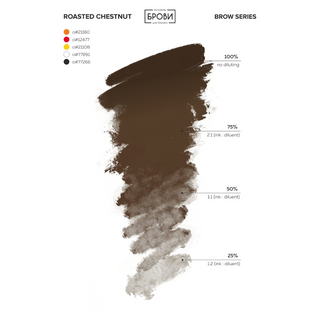
Guardar $16.95
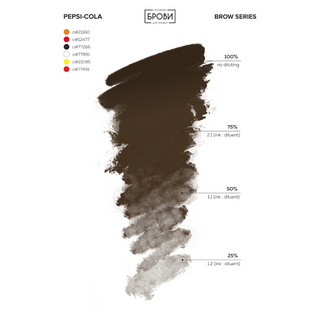
Guardar $16.95


Guardar $39.00

Natural Hair Density and What It Means for Technique Selection
The density of the client's natural brow hair is the second major variable after skin type, and it affects technique choice in ways that aren't always obvious.
Clients with good natural hair density are ideal candidates for hair stroke techniques of any kind. Natural hairs provide context for the PMU strokes — the eye processes both together as a single field of hair rather than analyzing individual marks. On these clients, even microblading strokes that have softened slightly with age continue to look natural because they're blending with real hair rather than sitting against bare skin.
Clients with sparse natural brows are where the technique difference matters more. On a largely hairless brow, every PMU stroke is visible as a stroke — there's no natural hair to contextualize it. This places more demand on the precision and longevity of each individual mark. Nano brows hold their shape better on these clients because the strokes maintain their definition through healing more reliably.
For very sparse brows on normal to dry skin, nano brows are still typically the better choice even if microblading might technically be viable. The margin for error is smaller — each stroke matters more — and the machine control of nano work provides a precision advantage.
For very sparse brows on oily skin, nano brows combined with shading — a combination brow approach — is almost always the strongest technical recommendation. Hair strokes alone, regardless of method, won't provide enough density to serve a nearly bare brow, and the shading component provides the background density that makes the strokes believable and the result wearable.
The Precision Argument for Nano Brows
Artists who have worked extensively with both techniques consistently describe nano brows as offering more technical control, particularly for detailed, precise hair stroke work.
The machine maintains consistent needle depth and speed mechanically, which removes one major variable from the equation. The artist controls direction, pressure angle, and movement speed, but the machine handles the rhythmic needle motion that determines depth. This consistency means the artist can focus entirely on stroke placement and direction rather than simultaneously managing hand speed, blade angle, and pressure.
The single ultra-fine needle used in nano work — typically a 0.25mm or 0.30mm round liner — creates strokes that are genuinely fine. Microblading blades, despite their precision appearance, cut a slightly wider channel than a single machine needle creates. On clients where very fine, hair-like strokes are the goal — Northern European clients, blondes, clients with very fine natural hair — nano work can achieve a delicacy that microblading struggles to match.
For complex brow mapping with unusual shapes — very asymmetrical natural brows, clients with significant facial asymmetry, or clients who want very specific directional patterns that follow the natural growth exactly — the machine-based control of nano work gives artists more flexibility to execute precisely.
Where Microblading Still Has a Case
Nano brows have real technical advantages in many client scenarios, but microblading isn't obsolete, and there are situations where experienced artists continue to choose it.
Client preference for the microblading process. Some clients specifically want microblading — they've researched it, they've seen results they love from artists who specialize in it, and they're requesting it by name. An experienced microblading artist working on an appropriate client will produce excellent results, and there's no reason to redirect a client away from a technique they want if they're a good candidate for it.
Artist specialization. Technique mastery matters more than technique choice in many cases. An artist who has executed thousands of microblading sessions with excellent healed results is likely to serve a suitable client better than an artist who recently added nano brows to their menu. The best technique for a given client is often the one the artist in front of them is best at.
Certain skin textures where blade contact produces cleaner initial strokes. On very smooth, dry skin with a consistent texture, some artists find that the single continuous channel of a microblading stroke produces a slightly cleaner initial line than the dot-series of a nano stroke. This advantage diminishes over the healing process — the healed results tend to be comparable on this skin type — but for artists who photograph fresh work extensively, the fresh microblading result on ideal skin can be visually striking.
Speed. A skilled microblading artist can execute strokes faster than a machine nano session because each stroke is a single continuous pass rather than a series of punctures. For high-volume practices, this can be a practical workflow consideration.
The Consultation: Translating Technique Knowledge Into Client Decisions
Most clients don't walk in asking for nano brows or microblading by name — they walk in wanting natural brows that last. The technique recommendation is the artist's professional judgment to make, and making it well requires asking the right questions.
Assess skin type visually and through conversation. Look at the skin at the consultation — visible pores, shine at the T-zone, texture, and general thickness all tell you what you need to know. Ask about skincare routine: clients using retinol, AHAs, or prescription acne medications are giving you additional information about skin activity that affects technique choice.
Ask about previous PMU. A client who had microblading two years ago and is coming in for new work is giving you a healed result to evaluate. How did the strokes hold up? Did they blur, fade evenly, or shift color? This is real-world data about how their skin behaves with blade-based PMU. If the healed microblading looks poor, that's a strong argument for switching to nano brows for the correction.
Show healed results, not just fresh work. Fresh-work photos are deceptive — both techniques look striking in good lighting immediately after the session. What matters is how the work looks at six weeks and twelve months. Clients who see healed results from both techniques on similar skin types can make a more informed choice.
Be specific about longevity expectations. Nano brows on oily skin may last ten to fourteen months before a touch-up. Microblading on oily skin may look significantly faded or blurred within six months. These are not the same service, and the client paying the same price deserves to know which outcome is realistic for their skin.
Address the healing process. Both techniques produce significant change during healing — the ghost-brow phase around days eight to twelve, when the surface layer peels and the brows appear very light, surprises clients who aren't warned. This is a conversation to have at every consultation regardless of technique.
Contraindications: When Neither Technique Is Appropriate
Some clients aren't good candidates for any hair stroke brow work, and identifying them at consultation is as important as choosing between the two techniques.
Clients who are pregnant or breastfeeding should be advised to wait — the hormonal changes during and after pregnancy affect how the skin heals and how pigment retains, and the recommendation to avoid PMU during this period is standard across the industry.
Clients on blood thinners, chemotherapy agents, or certain immunosuppressants have impaired wound healing and are higher-risk for any needle-based procedure. Medical clearance from their prescribing physician is appropriate before proceeding.
Clients with active skin conditions in the treatment area — psoriasis, eczema flares, significant acne — should be rescheduled until the condition is resolved. Compromised skin heals unpredictably and is more vulnerable to infection.
Clients with a documented history of keloiding should be approached with extreme caution for microblading, which creates open channels, and with careful assessment for nano brows. Keloid formation is uncommon in the brow area specifically, but a client with documented keloiding elsewhere is a risk factor that warrants a patch test and an informed consent conversation.
How Pigment Choice Interacts With Technique
The pigment you use should be matched to the technique, not treated as a single choice across all hair stroke work.
Microblading channels accept pigment differently than nano punctures do. The channel has more surface contact with the surrounding tissue and holds a larger volume of pigment per stroke. Pigments with larger particle sizes — including some inorganic mineral pigments — can struggle to flow through a microblading blade smoothly, creating inconsistent implantation.
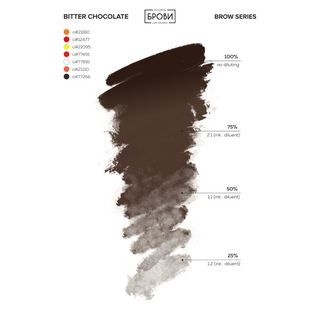
Nano brows use a single needle with a very fine tip. The pigment needs to flow through this needle under machine pressure, which means viscosity matters. Very thick pigments may not flow consistently through a fine round liner, creating patchy implantation. More liquid hybrid pigments — like the BROVI+ line with its deionized water base and fine particle size — are specifically engineered for the flow characteristics that machine work requires.
For both techniques, the pigment should be matched to the client's skin tone and undertone, not just to the desired color in the bottle. The same shade heals differently on Fitzpatrick I skin versus Fitzpatrick IV skin, and understanding how the client's skin will interact with the pigment's color base is as important as technique selection.
Combination Brows: The Third Option Worth Discussing
For clients whose skin profile sits between ideal candidates for either pure technique — oily-normal skin with moderate natural hair, for example — the combination brow approach is worth raising at consultation. Adding shading to either hair stroke technique provides density, longevity, and coverage that neither pure technique achieves alone.
The conversation about combination brows doesn't have to be complicated. For the right client, it's simply: the hair strokes give you the natural, realistic look you want, and the shading behind them makes sure that look lasts and reads as a full brow even as it heals. Most clients understand that immediately, and many who would have been borderline candidates for either pure technique end up being excellent candidates for the combined approach.
The Practical Takeaway
Nano brows and microblading are both legitimate, effective techniques for the right clients. The choice between them isn't a question of which is better — it's a question of which is better suited to the person sitting in front of you.
On dry, normal skin with good natural hair density: either technique in skilled hands will produce excellent results. Let artist specialization and client preference guide the choice.
On oily or combination skin: nano brows, or a combination approach that pairs nano strokes with shading. Microblading on oily skin is a technically difficult result to achieve and maintain.
On mature, thin, or sensitive skin: nano brows offer more control, less trauma per unit of treatment area, and more predictable depth management.
On sparse brows, regardless of skin type: nano brows combined with shading. Pure hair strokes — micro or nano — on a nearly bare brow require the most from both the technique and the healed result. The combination approach provides density that supports the strokes and gives the client a result that works even if individual stroke detail softens over time.
The artists producing the most consistent, satisfied client base are rarely those who have committed to one technique and apply it to every brow. They're the ones who have both tools available, understand the clinical rationale for choosing between them, and make the recommendation at consultation based on what will actually serve the client's skin — not what's most comfortable or familiar to execute.