
Pigment selection for darker skin is one of the areas where the gap between theoretical knowledge and practical skill shows up most clearly. An artist who has built their technique on lighter-skinned clients — Fitzpatrick I through III — and then attempts to apply the same color logic to a Fitzpatrick V or VI client is going to produce results that disappoint, and sometimes results that actively harm the client's skin.
The challenges are real and specific. Darker skin tones don't just require darker pigments. They require a different understanding of how pigment interacts with the melanin already present in the skin, how that interaction affects healed color, how the skin's structure at higher Fitzpatrick types changes the implantation process, and what correctors are needed and when. Getting this right consistently requires building a color framework specifically for darker skin rather than adapting one built for lighter skin.
This article covers the clinical and technical considerations that actually matter for Fitzpatrick IV through VI PMU work — pigment selection, corrector use, depth and technique adjustments, and the consultation conversations that set realistic expectations.
Understanding What Makes Darker Skin Different for PMU
The Fitzpatrick scale classifies skin into six types based on melanin content and UV response. Types I through III represent lighter skin with lower melanin levels and a tendency to burn rather than tan. Types IV through VI represent skin with progressively higher melanin content — Mediterranean, Asian, Hispanic, Middle Eastern, South Asian, and African skin tones all fall across this range.
For PMU purposes, higher melanin content has several direct clinical implications.
Melanin competes with implanted pigment optically. The melanin in darker skin is not just a surface color — it exists throughout the epidermis and into the upper dermis, which is where PMU pigment lives. This means the healed pigment is always being read in the context of the melanin surrounding it. A pigment color that reads as warm brown on Fitzpatrick II skin may read as almost invisible on Fitzpatrick V skin because the melanin is closer in value to the pigment, reducing contrast. Conversely, a pigment that reads as natural on lighter skin may read as unnaturally cool or gray on darker skin because the skin's warm undertone overwhelms and contradicts the pigment's cooler base.
Darker skin often heals PMU pigment cooler than lighter skin does. This is one of the most consistent and clinically important observations in PMU work with Fitzpatrick IV–VI clients. The higher melanin content and often higher sebum production of darker skin types affect how pigment ages in the dermis — the warm undertones in many pigments are neutralized or pushed out over time, leaving the healed result reading cooler, more ashy, or more grayish than the pigment initially appeared. Artists who don't compensate for this in their pigment selection end up with clients whose brows heal gray or slate rather than warm brown.
Post-inflammatory hyperpigmentation (PIH) is a significant risk. Darker skin types have more active melanocytes — the cells that produce melanin — and those melanocytes are more easily triggered by trauma. Any inflammation in the skin, including the inflammation produced by PMU procedure, can stimulate melanocytes to produce additional melanin as a protective response. In lighter skin types, this produces temporary redness. In Fitzpatrick IV–VI skin, it can produce a darkening of the treated area that persists long after the PMU itself has healed — sometimes permanently. This risk is real, and it affects both technique and the choice of how aggressively to work in a single session.
Sebum production is often higher. Oily skin is more common in higher Fitzpatrick types, and higher sebum production affects pigment retention in the ways discussed elsewhere — faster fading, more tendency toward blurring of fine lines, and more need for the technique adjustments appropriate for oily skin. It also affects which PMU techniques are most appropriate, with machine-based powder and combination work typically outperforming pure hair strokes on very oily skin.
Skin thickness varies significantly. This is where generalizations about "darker skin" become less useful — there's enormous variation within the Fitzpatrick IV–VI range. Many clients in the Fitzpatrick IV–V range have thicker, more robust dermis than lighter-skinned clients, which can actually support more deliberate pigment implantation. Fitzpatrick VI skin is often very dense with excellent structural integrity. But there are also clients across this range with thinner or more sensitive skin, and assumptions about thickness based on skin color alone can lead to overworking. Assess each client individually.
The Core Problem: Why Standard Pigments Underperform on Darker Skin
Most PMU pigment lines were developed with the majority of existing artists and clients in mind, which historically meant lighter Fitzpatrick types. The base formulas, the undertone assumptions, and the color development logic in many standard lines reflects this — and it creates predictable problems when those pigments are used on darker skin without adjustment.
Cool-based pigments heal gray or blue. Many brown brow pigments have a cool or neutral undertone in their formula — because on Fitzpatrick II–III skin, a slightly cool brown heals into a warm, natural-looking result after the skin's warm undertone interacts with it. On Fitzpatrick V–VI skin, the same pigment's cool base is amplified by the healing process rather than balanced. The result is a brow that heals with a gray, blue-gray, or slate cast that looks nothing like the brown that went in.
Low-saturation pigments disappear. Pigments formulated for lighter skin often have a color depth calibrated for skin that has less competing melanin. On darker skin, the same saturation level that produces a visible, defined result on Fitzpatrick II skin may produce a result that's barely detectable on Fitzpatrick V skin — the melanin in the surrounding tissue simply absorbs the visual impact of the pigment.
Warm pigments heal orange on certain skin types. This is the opposite problem, and it occurs when artists overcorrect. Adding too much warm undertone to compensate for the gray-healing tendency of standard pigments can push the healed result into an orange or red-orange cast, particularly on clients with yellow undertones in their skin. The correction needs to be measured, not maximal.
Understanding these failure modes specifically — and knowing which clients are at risk for which failure — is the foundation of good pigment selection for Fitzpatrick IV–VI work.
The Fitzpatrick IV Client: Mediterranean, Hispanic, South Asian, Middle Eastern Skin
Fitzpatrick IV represents a wide range of skin tones — deeper Mediterranean, Hispanic, South Asian, Middle Eastern, and some East Asian clients. The skin tans easily, rarely burns, and has enough melanin to affect PMU outcomes but not to the degree that Fitzpatrick V–VI skin does.
The primary pigment consideration for Fitzpatrick IV is undertone management. Many clients in this range have warm, olive, or yellow-toned skin. A pigment with a neutral or cool brown base will heal differently on this canvas than on a cooler-toned lighter client — often pulling slightly ashy or greenish rather than warm and natural. Selecting pigments with a warm brown base, or adding a small amount of warm corrector to a neutral pigment, compensates for this.
Saturation should be slightly higher than for Fitzpatrick II–III. The higher melanin content means you need more pigment presence to achieve contrast against the skin. Not dramatically more — over-saturating produces flat, unnatural-looking results — but the color depth of the pigment you choose should be a step up from what you'd select for lighter skin.
The gray-healing risk is present but manageable. Fitzpatrick IV clients are at meaningful risk for cool healing if standard cool-based pigments are used without correction. The correction is usually modest — a small amount of orange or warm modifier added to the base pigment, or selection of a specifically warm-toned brown rather than a neutral brown. A corrector is not always necessary if the primary pigment already has a warm base.
PIH risk is elevated compared to Fitzpatrick I–III. Working gently — fewer passes, lighter pressure, avoiding overworking — is appropriate for this client group regardless of technique. The skin can handle PMU work well, but it responds to excessive trauma with hyperpigmentation more readily than lighter skin does.
Recommended approach for Fitzpatrick IV:
Select a warm-based brown pigment one shade deeper than you'd use for Fitzpatrick III. If using a neutral brown, add a small amount of warm modifier — orange-based for clients with neutral or cool undertones, yellow-based for clients with olive or yellow undertones. Work with deliberate passes and avoid overworking. Assess healed results at six to eight weeks before considering saturation adjustments.
The Fitzpatrick V Client: Deeper Brown Skin Tones
Fitzpatrick V represents deeper brown skin — many African American, South Asian, Caribbean, and Middle Eastern clients fall in this range. The melanin content is high enough that the considerations that are minor for Fitzpatrick IV become primary for Fitzpatrick V, and the consequences of getting pigment selection wrong are more visible and more difficult to correct.
Saturation must be substantially higher. A pigment that reads as a rich, defined brown on Fitzpatrick III skin may heal almost invisibly against Fitzpatrick V skin. The color depth of your pigment selection needs to genuinely account for this. This doesn't mean using black or very dark pigments — it means selecting deep, richly pigmented warm browns with enough color presence to read clearly against a high-melanin background.
The warm base is non-negotiable. On Fitzpatrick V skin, a neutral or cool-based brown pigment will reliably heal gray, blue-gray, or ashy. This is not a variable outcome — it's a predictable one. The warm undertone that compensates for this needs to be built into the base pigment selection, not added as an afterthought. Look specifically for pigments described as warm brown, chestnut, or dark warm brown for this client group.
Correctors are typically required. For most Fitzpatrick V clients doing brow work, some degree of color correction is appropriate — not to neutralize old PMU, but to add warmth to the base pigment formula before implantation. Orange-based correctors add warmth to neutralize the skin's tendency to pull pigment cool. Red-based correctors are appropriate for clients who need additional depth along with warmth. The amount of corrector should be calibrated carefully — a small addition changes the healed outcome significantly, and over-correcting creates orange results that are as problematic as gray ones.
Lip work on Fitzpatrick V clients requires specific pigment strategy. Darker lip tones are common in this Fitzpatrick range — some clients have lips that are significantly darker than the surrounding skin, with cool blue or purple undertones in the natural lip color. Standard lip blush pigments applied over a dark base will not read as intended — the dark underlying color will push through the implanted pigment and shift the healed result. A corrector or neutralization layer — typically a warm, skin-tone-adjacent base applied first — is essential before the color pigment layer in lip work on clients with significantly pigmented lips.
PIH risk is high and should shape the entire session approach. Working on Fitzpatrick V skin requires a genuinely conservative approach to trauma. Fewer passes, lighter pressure, machine speed adjustments to reduce per-pass inflammation, and stopping well before the skin shows visible signs of overworking. The results you achieve in a conservative session can be built upon at touch-up. The PIH that results from aggressive overworking on darker skin is much harder to undo.
Recommended approach for Fitzpatrick V:
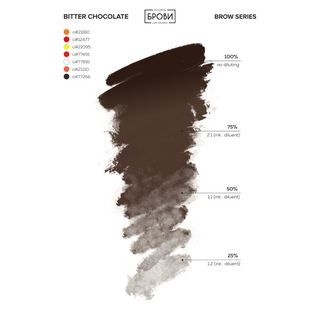
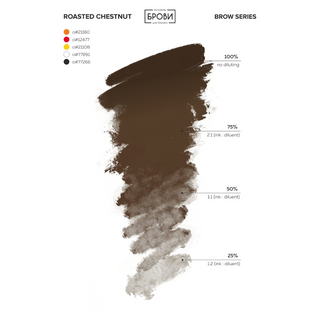
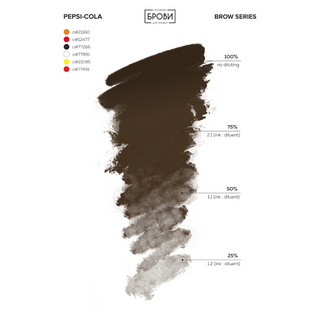
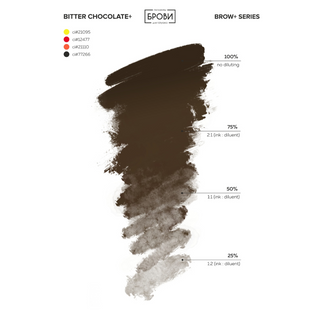
Select a deep, warm-toned brown — Bitter Chocolate or equivalent in your pigment line — as your base. Add orange-based corrector at approximately 20–30% of the total pigment volume, adjusting based on the client's specific undertone. For very warm-toned clients with yellow or orange undertones in the skin, reduce the corrector proportion or omit it and use a red-brown base instead. Work in light, deliberate passes. Plan for a touch-up session to complete saturation rather than achieving maximum intensity in session one.


Save £28.86
Save £12.91
Save £12.91


Save £29.69

The Fitzpatrick VI Client: Deep Black Skin Tones
Fitzpatrick VI represents the deepest skin tones — very high melanin content, skin that never burns and tans minimally because it's already at maximum melanin expression. PMU on Fitzpatrick VI skin requires the most significant departure from standard pigment selection logic, and it's the client group where inexperienced artists most frequently produce poor outcomes.
Contrast is the fundamental challenge. The melanin level in Fitzpatrick VI skin is so high that many standard brow pigments — even dark ones — have insufficient contrast to produce a clearly visible result. The implanted pigment reads against a very dark background, and if the pigment is not deep enough in color or warm enough in undertone, it will disappear into the surrounding skin.
Warm pigments with deep color saturation are essential. For brow work on Fitzpatrick VI clients, the pigment selection should be among the darkest warm browns in your palette — not black, which heals flat and unnatural, but deep chestnut, deep dark brown, or espresso tones with a warm base. The depth of color provides the contrast the skin requires. The warm undertone prevents the gray-healing outcome that affects this population even more dramatically than Fitzpatrick V.
Dark lip correction is almost always required for lip work. Fitzpatrick VI clients frequently have very dark, highly pigmented lips with strong blue or purple undertones. Attempting lip blush directly over a dark lip without a corrector base will produce results where the dark underlying lip color dominates the healed outcome — the client ends up with a slightly modified version of their natural lip rather than the soft, defined color result they came in for. A full lip neutralization protocol — applying warm, skin-tone base pigment first to neutralize the cool dark undertone, allowing that to heal, then applying the color layer — is the appropriate approach for clients with significantly pigmented lips.
The gray-healing risk is maximum. On Fitzpatrick VI skin, a cool-based pigment doesn't just soften into an ash tone — it can heal in a way that reads as obviously wrong, with a blue-gray cast that is clearly PMU rather than natural. Every pigment selection for this client group must be evaluated for its warm undertone, and correctors should be considered standard protocol rather than optional.
Scar tissue and keloid risk deserve specific attention. While keloiding is not universal across darker skin types, the risk is statistically higher in Fitzpatrick V–VI clients than in lighter skin types. A consultation that discusses keloid history, asks about how previous cuts or wounds healed, and evaluates any visible previous scarring is essential. For clients with known keloid history, patch testing and an extended conversation about risk is the appropriate next step — not simply proceeding with the procedure.
PIH risk is at its highest. Every technique consideration that applies to Fitzpatrick V skin applies even more emphatically to Fitzpatrick VI. Work conservatively. Plan for multiple sessions. Avoid overworking. The skin can produce excellent PMU results, but it requires a significantly more careful approach than lighter skin types to achieve those results without triggering reactive hyperpigmentation.
Recommended approach for Fitzpatrick VI:
Select the deepest warm brown in your pigment palette — Bitter Chocolate, Dark Chocolate, or the darkest chestnut available. Add orange and potentially red corrector, calibrated to the client's undertone. The corrector proportion may be higher than for Fitzpatrick V — some artists work at 30–40% corrector in the mix for very deep skin tones, though this varies significantly by client. For lip work, plan for a neutralization session followed by a color session rather than attempting both in a single appointment. Work in the lightest possible passes, prioritizing skin safety over session completeness.
Correctors: When to Use Them and How Much
The corrector conversation for Fitzpatrick IV–VI clients is not optional — it's central to achieving good healed results. But correctors need to be used with understanding, not as a blanket approach.
Orange corrector is the most commonly used corrector for brow work on darker skin. It adds warmth that counteracts the cool-gray healing tendency of darker skin. It's appropriate for clients with neutral to cool undertones in their skin — clients whose complexion reads as brown without significant yellow or olive. It's also the primary corrector for correction work on previous PMU that has healed gray or blue.
Yellow corrector adds warmth of a different quality — lighter, more golden. It's appropriate for clients with olive or yellow-dominant undertones, where orange would push the result into a muddy or overly saturated warm cast. Yellow corrector is also used to lighten and warm pigment mixtures without adding the redness of orange.
Red-orange corrector is a deeper, more saturated warm corrector appropriate for clients who need both warmth and depth — often Fitzpatrick V–VI clients with very deep skin tones where standard orange provides warmth but not enough color presence.
Red corrector in the context of lip work is specific to neutralizing very dark, cool-toned lips. It works by introducing a warm red undertone that counteracts the blue and purple in highly pigmented dark lips, creating a warmer base that allows the color pigment to read more accurately.
Green corrector goes over old PMU that has healed red or orange — the opposite direction on the color wheel. It's less commonly needed for Fitzpatrick IV–VI work unless you're correcting previously done PMU that overcorrected warm and healed orange.
The amount of corrector in any mixture should be the minimum needed to achieve the desired color shift. Start conservatively — ten to twenty percent of the total mix — and assess how the pigment behaves in the skin before committing to a higher proportion. Correctors are concentrated, and more is not always better.
Pigment Brands and Lines for Fitzpatrick IV–VI Work
Not all pigment lines are equally suited to darker skin work. The brands that perform best for Fitzpatrick IV–VI clients share several characteristics: deep color saturation options, explicitly warm-toned brown shades in their darkest range, and clear corrector sets that include the orange and red-based options needed for this client group.
Etalon Mix offers a hybrid line with specific dark warm brown shades — Dark Chocolate and Espresso — that provide the color depth and warm undertone appropriate for Fitzpatrick IV–V work, along with a corrector set that includes orange, yellow, and terracotta options for undertone adjustment.
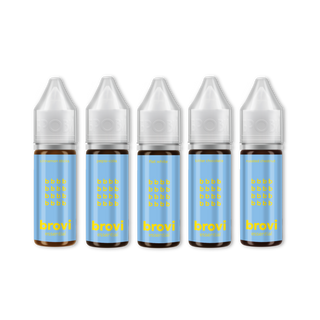
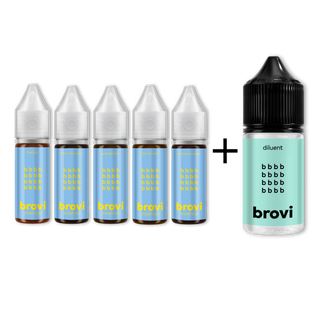
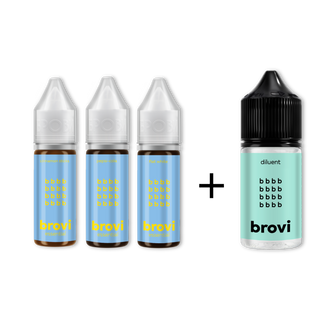
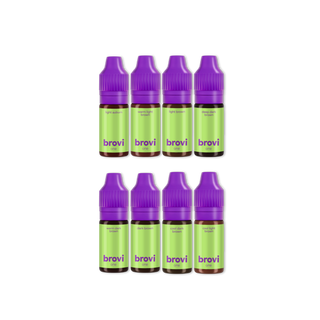
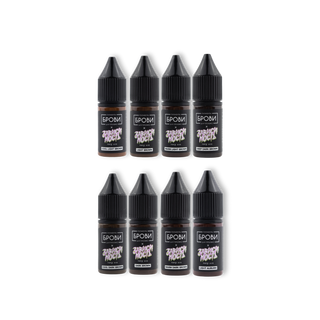
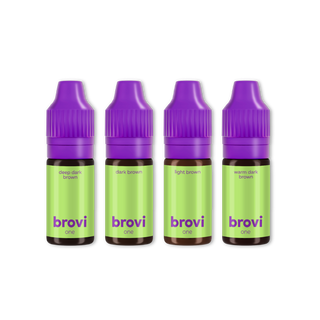
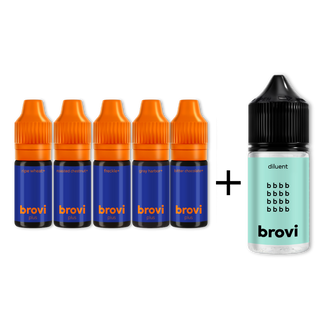
Brovi includes Bitter Chocolate, the deepest warm brown in the line, specifically recommended for Fitzpatrick IV–V Mediterranean and Asian skin types, along with an orange corrector designed for neutralizing cool-toned skin and gray previous PMU.
Hanafy offers both hybrid and inorganic lines with shades specifically formulated for deeper skin tones, including options calibrated for Fitzpatrick V–VI clients.
BioColors provides a range that includes deep warm browns with inorganic stability — relevant for clients where longevity and color predictability are the primary concerns.
Across all of these lines, the principle is the same: identify the deepest warm brown available, understand the corrector set, and mix deliberately for the specific client in front of you rather than using a standard formula across all darker-skin clients.
Technique Adjustments That Support Better Outcomes on Darker Skin
Pigment selection is necessary but not sufficient. The technique used to implant that pigment also needs to be calibrated for the specific characteristics of darker skin.
Reduce trauma at every opportunity. This is the single most impactful technique adjustment for Fitzpatrick IV–VI work. Lighter pressure, fewer passes, slower machine speeds, smaller working sections — all of these reduce the inflammatory stimulus that triggers PIH. The healed result is built over multiple sessions, not achieved in one maximally aggressive session.
Implant at the correct depth, not deeper. The instinct on darker skin — where pigment contrast can feel lower during the procedure — is to press harder or go deeper to achieve more visible saturation. This is exactly the wrong response. Deeper implantation on darker skin produces pigment that heals cool and blurry, and increases the trauma that triggers PIH. The correct response to low in-session contrast is pigment selection adjustment, not depth adjustment.
Consider combination technique over pure hair strokes on oily darker skin. Fitzpatrick V–VI skin is often on the oilier side, and oily skin's challenges with hair stroke retention are compounded by the higher contrast requirements of darker skin. A healed hair stroke that's soft and slightly blurred is barely detectable against a high-melanin background. Adding shading provides the density and longevity that maintains a visible, well-defined result even as individual stroke detail softens.
Use appropriate machine settings for the skin type. Slower needle speeds reduce per-pass trauma on sensitive and reactive skin. For clients with obvious sensitivity indicators — skin that shows redness quickly, previous PIH in other areas — adjusting the machine Hz downward from your standard setting is a simple intervention that can meaningfully reduce the inflammatory response.
Plan for multiple sessions from the start. A conservative initial session that achieves seventy to eighty percent of the intended color result — and does so without triggering PIH — is a better clinical outcome than an aggressive session that achieves full saturation but leaves the skin hyperpigmented. Frame the multiple-session approach to the client as the correct protocol for their skin, not as a limitation or a failure.
The Consultation: What to Cover with Every Fitzpatrick IV–VI Client
The consultation for a darker-skin PMU client should cover several areas that aren't always part of a standard consultation with lighter-skin clients.
Discuss PIH directly. Explain that darker skin responds to trauma with increased melanin production, that this can produce temporary or sometimes longer-lasting darkening in the treated area, and that your technique approach is specifically designed to minimize this risk. Clients who understand PIH before the procedure are far less alarmed if they see some darkening during healing, and they're more likely to follow aftercare instructions that support healthy healing.
Ask about previous PMU or tattooing and how it healed. A client who had a tattoo elsewhere that healed with PIH, raised texture, or unexpected color shifts is giving you important information about how their skin responds to needle trauma. Adjust your approach accordingly.
Ask about keloid history specifically. Direct question, direct answer. If the client has a history of raised, thick scarring from previous wounds or procedures, discuss it openly and consider a patch test before proceeding with a full procedure.
Ask about current skincare. Retinol, hydroquinone, and certain prescription skin treatments affect how the skin heals PMU and how long the results last. Clients using skin-lightening products — which are more commonly used by clients with darker skin tones, often to address hyperpigmentation — may find that those products affect their PMU retention. This is a conversation worth having before the procedure, not after the healed result underperforms.
Show healed results specifically from comparable skin tones. This is as important for Fitzpatrick IV–VI clients as it is for any other group — more so, because many online PMU galleries are dominated by lighter-skin work. A Fitzpatrick V client who has only seen healed brow results on Fitzpatrick II skin has no realistic frame of reference for what their result will look like. Showing them comparable skin-tone results sets an accurate expectation and demonstrates that you have experience with their specific client profile.
Common Mistakes and How to Avoid Them
Using cool-based pigments without correctors on Fitzpatrick V–VI clients. The result heals gray or ashy. Avoid by selecting warm-based pigments or adding orange corrector as standard protocol for these clients.
Underestimating the saturation required. The result heals lighter than expected — sometimes barely visible. Avoid by selecting deeper pigments and planning touch-up sessions to build saturation rather than attempting to compensate by going deeper in a single session.
Overworking in a single session to compensate for low in-session contrast. The result heals with PIH — darkening of the skin around the PMU that is more visible than the PMU itself. Avoid by accepting that Fitzpatrick IV–VI work is built over multiple sessions and that conservative first sessions produce better outcomes than aggressive ones.
Using the same corrector proportion for all darker skin clients. A twenty percent orange corrector addition appropriate for Fitzpatrick IV may be insufficient for Fitzpatrick VI, and a forty percent addition appropriate for Fitzpatrick VI may push a Fitzpatrick IV result into an orange cast. Calibrate corrector proportions to the specific client's skin tone and undertone.
Skipping the PIH conversation at consultation. When PIH occurs despite careful technique — and it can, even with the best approach — a client who wasn't warned experiences it as a complication. A client who was warned experiences it as an expected part of the healing process that your aftercare instructions will support.
Aftercare Considerations for Darker Skin
The healing process for Fitzpatrick IV–VI clients benefits from some specific aftercare considerations beyond the standard wet-or-dry protocol.
Sun avoidance is even more critical. UV exposure stimulates melanin production and significantly increases PIH risk in the healing period. Darker-skin clients should be strongly counseled to keep the treated area completely out of direct sun during the first two weeks, and to use SPF protection thereafter as a standard maintenance practice.
Fragrance-free, non-active aftercare products only. Many skincare products marketed for darker skin tones contain active ingredients — niacinamide, vitamin C, kojic acid, hydroquinone — intended to address hyperpigmentation. These ingredients can affect PMU healing and retention. The client's usual skincare routine should be kept away from the treated area during healing.
Treat any PIH that develops promptly and appropriately. If a client develops post-procedure hyperpigmentation, early intervention is more effective than waiting. Gentle sun protection, avoidance of additional irritation, and for persistent PIH, consultation with a dermatologist about appropriate topical treatment, can significantly improve outcomes. PIH that's ignored tends to deepen; PIH that's addressed early often resolves more completely.
Building a Practice That Serves Darker Skin Clients Well
The artists who consistently produce excellent work on Fitzpatrick IV–VI clients share a common characteristic: they've invested specifically in understanding this client group rather than adapting lighter-skin techniques and hoping for the best.
That investment involves building a warm-pigment selection that includes genuinely deep browns, a corrector set that covers orange, yellow, and red bases, and a framework for adjusting corrector proportions to specific undertones. It involves developing session habits — conservative passes, planned multiple sessions, technique adjustments for PIH risk — that are calibrated to the skin rather than carried over from lighter-skin work. And it involves consultation practices that address the specific concerns of darker-skin clients: PIH, keloid risk, realistic healed-result expectations, and the particular challenges of lip work on heavily pigmented lips.
This investment pays off in a client base that is underserved in many markets, and that when served well, produces the most loyal referral relationships in the industry. A Fitzpatrick V or VI client who gets genuinely good results from an artist who understood her skin has often struggled to find that artist — and when she finds one, she sends everyone she knows.